
WMO-Compliant Meteorological Monitoring: Siting Standards, Mast Heights & Sensor Clearances
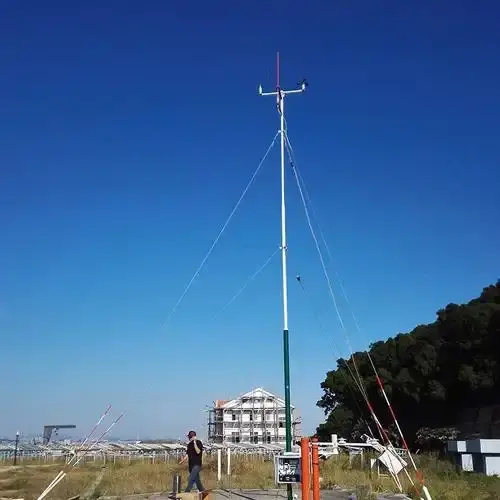
In synoptic weather observation, climatological research, and official forecasting, data comparability is paramount. Sensor measurements must reflect true regional atmospheric states rather than localized aerodynamic turbulence or microclimate interference from buildings, asphalt roads, and trees.
The World Meteorological Organization (WMO-No. 8: Guide to Instruments and Methods of Observation) establishes rigorous international baselines for instrument exposure, operational accuracy, and long-term sensor calibration. Adhering to these global benchmarks ensures that environmental data can be assimilated into international numerical forecasting models without synthetic bias.
For municipal operators and research institutes engineering professional observation networks, review our comprehensive portfolio of WMO-compliant meteorological monitoring solutions designed for zero-maintenance field stability.
1. The 10-Meter Wind Siting Standard
Surface friction slows air velocity close to the ground, creating a logarithmic boundary wind profile. To obtain representative horizontal synoptic wind vectors, standard meteorological stations mandate mounting anemometers precisely 10 meters above open, unobstructed terrain.
Overcoming Mast Flow Distortion
Installing an anemometer directly against a bulky lattice tower or tubular mast induces severe flow separation and wake shadowing. WMO engineering guidelines mandate:
- Horizontal Boom Separation: Sensors mounted on side booms must be displaced by at least three times the tower diameter away from the lattice face.
- Prevailing Alignment: Booms should extend perpendicular to or facing directly into the regionally prevailing wind direction.
- Solid-State Advantages: Deploying solid-state instruments like the VT-WDC2E Ultrasonic Anemometer avoids the mechanical bearing friction that plagues legacy cup units, ensuring instantaneous acoustic sampling across the entire 0~40 m/s range.
2. Temperature & Relative Humidity Exposure Clearances
WMO standards dictate that air temperature and humidity sensors must be positioned between 1.25 meters and 2.0 meters above natural ground cover:
- Surface Cover: The ground beneath the sensors should consist of natural, mowed grass or representative soil. Paved asphalt or dark gravel radiates intense long-wave thermal energy that corrupts daytime readings.
- Aerodynamic Radiation Shielding: Louvered multi-plate white shields are essential to protect the sensing element from direct solar irradiance while maintaining continuous passive air aspiration. Learn how sensor shields safeguard against thermal bias in our guide on Temperature, Humidity & Pressure Sensor Radiation Shielding.
3. Precipitation & Rain Gauge Leveling
Precipitation collection orifices must remain horizontally level to within $pm 0.5^circ$. High horizontal winds cause raindrops to deflect over the collection funnel, resulting in wind undercatch. In open windy locations, installing a dynamic Alter wind screen around a tipping bucket rain gauge decelerates incoming air velocity, allowing raindrops to settle naturally into the knife-edge funnel.
4. Selecting Tier-1 Meteorological Instrumentation
Building a WMO-grade station requires partnering with certified manufacturers capable of delivering factory-traceable calibration certificates. Review our comparative industry analysis on the Top 10 Weather Sensor Manufacturers to benchmark global hardware lifecycles and total cost of ownership.
Conclusion
Adhering to WMO siting rules and deploying solid-state sensors with zero mechanical drift ensures scientific data integrity over decades of continuous monitoring. Contact the Virtue Instrument engineering team to discuss turnkey mast designs, custom boom mountings, and certified sensor packages for your observation project.