
Tipping Bucket Rain Gauge Guide: Accuracy, Calibration & Maintenance
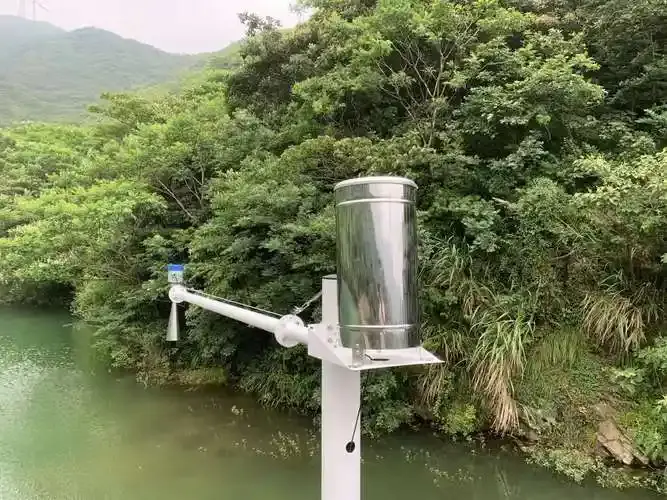
Accurate rainfall measurement is vital for hydrology modeling, municipal stormwater management, and agricultural water balancing. Among various precipitation measurement instruments, the tipping bucket rain gauge remains the global standard for remote observation networks due to its physical reliability and passive pulse operation.
This technical guide examines the internal mechanics of tipping-bucket sensors, source of high-intensity dynamic error, and field servicing practices within outdoor smart agricultural weather stations.
1. Mechanical Working Principle
Rainfall enters via a sharpened knife-edge circular funnel rim (typically 200 mm / 8 inches in diameter to meet WMO guidelines). The collected water filters through a fine mesh screen before draining into a balanced two-compartment bucket pivot.
When the active bucket receives its calibrated volume (e.g., 0.1 mm or 0.2 mm of precipitation), center-of-gravity tipping occurs. A tiny magnet mounted on the bucket sweeps past a sealed reed switch, closing a contact circuit and transmitting a discrete pulse to the station's environmental data logger. The alternate bucket swings into place beneath the funnel to catch incoming rainfall seamlessly.
2. Dynamic Error During Heavy Rainstorms
During extreme downpours, a tipping bucket is subject to "tipping transit loss". During the fraction of a second when the bucket is rocking past center, incoming water pours directly into the draining compartment without being registered, causing a 5% to 15% negative under-reporting error at rainfall rates exceeding 100 mm/h.
Modern industrial loggers apply firmware-level dynamic polynomial correction curves to automatically compensate for high-intensity flow rates based on pulse interval frequency.
3. Field Installation & Leveling Checklist
- Precision Leveling: Even a 2-degree tilt creates an imbalance between the left and right bucket cavities, severely distorting accuracy; use the built-in bubble level to verify horizontal alignment.
- Bird Spikes & Debris Screens: Airborne leaves, seeds, and bird perching quickly clog the funnel orifice; install stainless-steel bird deterring spikes along the collector rim.
- Wind Undercatch: High horizontal winds push raindrops away from the collection funnel; in windy locations, mount an aerodynamic Alter wind shield around the gauge.
Conclusion
A well-maintained tipping bucket rain gauge delivers dependable precipitation data across decades of field service. Contact Virtue Instrument for certified rain gauge hardware, mounting pedestals, and replacement reed assemblies.