
Radar Rain Gauge vs. Tipping Bucket: Eliminating Funnel Clogging, Wind Undercatch & Field Maintenance
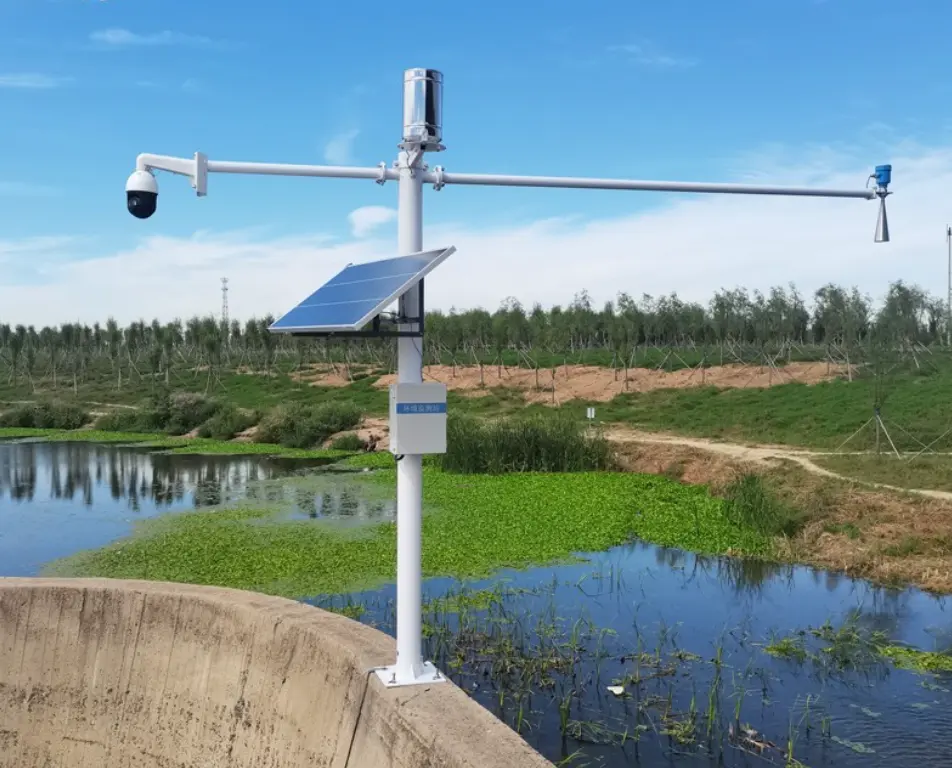
In hydrological monitoring, precision irrigation scheduling, and watershed flood forecasting, rainfall measurement is the foundation of every predictive water model. For more than a century, mechanical tipping-bucket rain gauges have served as the conventional standard.
However, field operators and agricultural agronomists know their glaring weakness: mechanical vulnerabilities. In unmonitored outdoor deployments, funnels clog with organic debris precisely when torrential downpours occur, recording zero rainfall during critical storm events. Discover how solid-state acoustic and radar architectures eliminate this maintenance overhead within our dedicated agricultural hydrology and smart farming solutions.
1. The Mechanical Failure Modes of Tipping Buckets
Tipping bucket gauges rely on rainwater funneling through a calibrated orifice into balanced mechanical seesaw cups (typically calibrated to 0.1 mm or 0.2 mm per tip):
- Organic Orifice Clogging: Windblown leaves, pine needles, dust deposition, and bird droppings accumulate in the funnel throat, forming an impenetrable plug.
- Dynamic Undercatch in Torrential Rains: During high-intensity convective cloudbursts (>50 mm/h), water continues pouring while the bucket transitions between tips. This "water loss during tip swing" causes uncorrected measurement errors of 10% to 25%.
- Mechanical Hysteresis & Leveling Drift: If frost heave or loose soil shifts the mounting mast by even 1.5°, the two opposing buckets trip at asymmetric volumes, introducing structural calibration drift.
2. Working Principle of 24GHz Doppler Radar Precipitation Sensors
Solid-state sensors—such as the VT-RS2E 24GHz Doppler Radar Rain Gauge—completely eliminate physical water collection:
- Doppler Frequency Shift: The planar antenna emits continuous microwave signals at 24.125 GHz. As raindrops fall through the transmission beam, they reflect microwaves back at a shifted frequency proportional to their terminal fall velocity.
- Droplet Size Distribution (DSD): Using established aerodynamic fall-velocity relationships (the Gunn-Kinzer model), the onboard digital signal processor (DSP) calculates both the individual drop diameter and falling speed, deriving instantaneous rainfall intensity ($mm/h$) in under 1 second.
- Hail & Sleet Discrimination: Because frozen hydrometeors (hailstones) possess significantly greater density and terminal velocity than liquid water droplets of comparable volume, radar algorithms differentiate hail from liquid rain automatically.
3. Field Performance Benchmark: Radar vs. Tipping Bucket
| Performance Metric | Traditional Tipping Bucket | 24GHz Solid-State Radar |
|---|---|---|
| Annual Maintenance | High (funnel clearing, re-leveling, pest removal) | Zero (no funnel, fully sealed IP65) |
| Heavy Rain Accuracy (>60 mm/h) | Drops severely due to tip transit loss | Maintains linear precision up to 200 mm/h |
| Initial Response Latency | Requires 0.1~0.2mm water accumulation before 1st tip | Instantaneous (< 1 second) upon first drop impact |
| Hail Detection Capability | Registers only after hailstones melt | Real-time hail impact & intensity reporting |
4. Low-Power Integration for Remote Agronomic Stations
Operating from standard 12VDC solar battery packs, modern radar rain sensors consume low operational current (< 25 mA in active continuous sampling mode), waking up automatically and streaming RS485 Modbus-RTU registers into remote field telemetry nodes without data loss.
Conclusion
Transitioning from mechanical tipping buckets to 24GHz Doppler radar ensures uninterrupted precipitation telemetry during severe storm conditions while eliminating expensive field cleaning visits. Contact our agricultural engineering specialists to review radar rain gauge calibration protocols, test datasets, and volume OEM integration.