
Airborne Wind Sensing: How UAV-Mounted Ultrasonic Anemometers Measure Boundary-Layer Weather
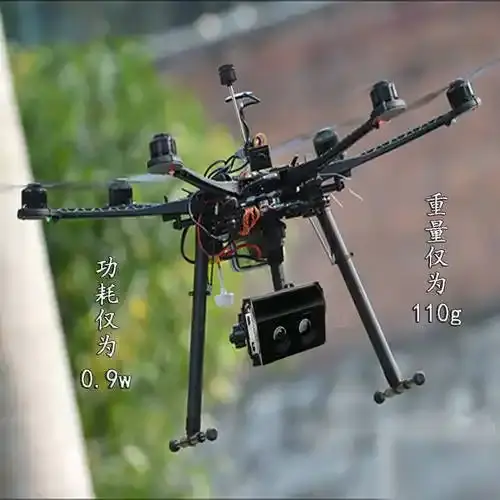
Traditional meteorological towers are constrained by fixed locations and height limitations, typically capturing surface atmospheric parameters only up to 10 or 30 meters. Meanwhile, weather balloons drift uncontrollably with ambient currents, precluding targeted stationary profiling.
The integration of ultra-lightweight UAV-mounted ultrasonic anemometers has transformed atmospheric boundary layer (ABL) research, wildfire spread tracking, and offshore micro-wind prospecting. By deploying drones equipped with solid-state wind and environmental sensors, researchers can sample continuous vertical columns of the atmosphere on demand.
Explore our full suite of fixed and mobile instruments within our professional meteorological monitoring solutions, including airborne sonic sensors engineered with minimal aerodynamic drag.
1. The Engineering Challenge: Overcoming Rotor Downwash
A multirotor drone stays airborne by generating high-velocity downward air displacement (downwash). If an anemometer is mounted underneath the airframe, the rotor downwash completely obscures the natural ambient horizontal wind vector.
Aerodynamic Siting & Elevation Masts
To acquire true atmospheric measurements, airborne instrumentation must adhere to strict installation rules:
- Elevated Top-Mounting: The ultrasonic sensing head must be mounted on a lightweight carbon fiber mast extending above the central body, positioning the acoustic paths outside the rotor upwash induction zone.
- Real-Time Vector Transformation: The drone's onboard IMU (Inertial Measurement Unit) tracks vehicle tilt (pitch, roll, yaw) and flight velocity. High-speed firmware subtracts drone kinematic motion vectors from the raw acoustic transit-time measurements to compute absolute horizontal wind speed and direction.
2. Why Solid-State Ultrasonic Sensors Are Essential for Drones
Mechanical cup or propeller anemometers cannot function on mobile airborne platforms: drone tilt angles lock up mechanical spindles, propeller inertia causes measurement lag, and vibration degrades mechanical bearings.
Dedicated instruments like the VT-UAVWSE and the compact VT-WDC2E Ultrasonic Anemometer offer distinct operational benefits:
- Ultra-Lightweight Construction: Weighing as little as 180 grams, minimizing payload impact on drone battery flight endurance.
- Instantaneous Acoustic Transit Time: High-frequency sampling (up to 4 Hz - 10 Hz) captures micro-scale turbulent eddies within localized convective thermals.
- Low Power Draw: Consuming just 15 mA @ 5 VDC, allowing the sensor to draw power directly from the drone's telemetry bus without dedicated auxiliary battery packs.
3. Key Applications in Environmental & Industrial Monitoring
- Vertical Atmospheric Profiling: Drones ascend vertically to measure boundary-layer temperature, humidity, and wind shear from ground level up to 500 meters, mapping low-level nocturnal jet streams.
- Industrial Emission Plume Tracking: Mobile UAVs track smoke plumes and volatile chemical dispersion from factory stacks in real time, calculating plume trajectories.
- Wind Farm Wake Analysis: Measuring the downwind wake deficits and turbulent kinetic energy behind massive offshore wind turbine rotors.
Conclusion
Airborne sonic anemometers bridge the critical spatial gap between fixed 10-meter surface masts and high-altitude satellite observation. Contact the Virtue Instrument team to discuss UAV wind sensor integration, custom serial output protocols, and carbon-fiber aerodynamic mounts.