
Agricultural Catchment Hydrology: Measuring Evapotranspiration (ET0), Soil Moisture & Field Runoff
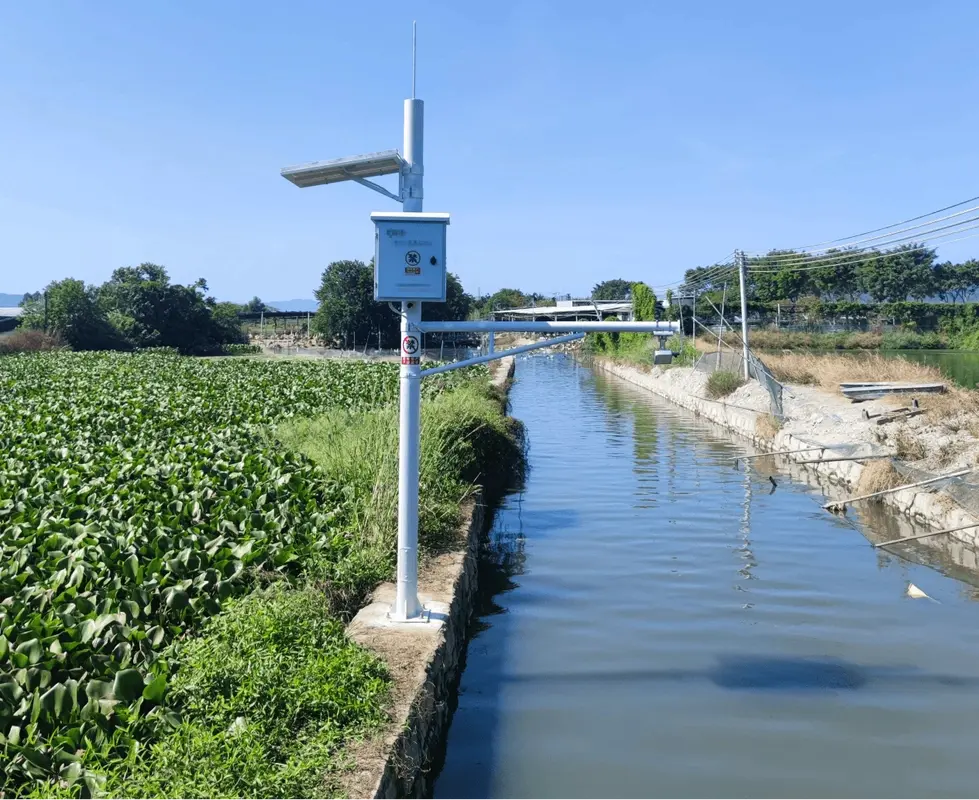
In modern commercial agriculture, water is both the primary input cost and a scarce resource governed by strict environmental conservation policies. Applying too little water induces moisture stress, stunting crop development; applying too much water leaches expensive nitrogen fertilizer below the root zone and generates agricultural non-point source runoff into regional watersheds.
Achieving closed-loop water balance requires bridging atmospheric moisture demand with subsurface soil dynamics. Explore how solid-state environmental arrays integrate within our agricultural hydrology and precision farming solutions.
1. The Agricultural Water Balance Equation
At the catchment or field scale, hydrological equilibrium is governed by the water conservation equation:
$$Delta S = P + I - ET_c - R - D$$
Where:
- $Delta S$: Change in root-zone soil water storage.
- $P$: Precipitation (measured via solid-state radar or acoustic sensors).
- $I$: Applied irrigation depth.
- $ET_c$: Crop evapotranspiration ($ET_c = K_c imes ET_0$).
- $R$: Surface runoff and furrow discharge.
- $D$: Deep vertical percolation below the root zone.
2. Calculating Reference Evapotranspiration ($ET_0$) via FAO-56
Atmospheric "thirst" dictates how rapidly crops transpire water through their stomata. The internationally recognized FAO-56 Penman-Monteith equation requires four continuous atmospheric inputs:
- Solar Radiation ($R_n$): The thermodynamic engine driving phase changes of water from liquid to vapor.
- Wind Speed ($u_2$): Horizontal air movement at 2 meters sweeps away saturated boundary layer air, maintaining high vapor pressure gradients.
- Air Temperature ($T$): Directly governs saturation vapor pressure ($e_s$).
- Relative Humidity ($RH$): Establishes actual vapor pressure ($e_a$) to determine vapor pressure deficit ($VPD = e_s - e_a$).
Compact stations such as the VT-SA6E All-in-One Weather Station integrate all four parameters into a single pole-mounted instrument, streaming calculated $ET_0$ values straight into automated irrigation valves.
3. Mitigating Agricultural Runoff & Chemical Leaching
Intense rainfall on saturated soil causes field runoff, washing costly topsoil and phosphorus into downstream rivers. By combining real-time rainfall rate telemetry with multi-depth soil volumetric water content (VWC):
- Predictive Cutoffs: Irrigation controllers automatically suspend scheduled drip or pivot cycles if radar sensors detect incoming precipitation fronts.
- Infiltration Rate Matching: Irrigation application rates are matched to the soil's natural saturated hydraulic conductivity ($K_{sat}$), ensuring every droplet infiltrates rather than running off into drainage furrows.
- Nutrient Retention: Preventing over-saturation stops expensive water-soluble nitrogen fertilizers from leaching into groundwater tables.
Conclusion
Implementing sensor-driven agricultural hydrology turns irrigation from a static timer schedule into a dynamic, data-driven optimization model. Contact the Virtue Instrument team to evaluate turn-key agricultural weather stations, SDI-12 soil sensor integration, and OEM telemetry modules.